Cybersecurity & Onboard Systems — Modern Yachts Are Floating Networks
The news-style reality (what keeps repeating)
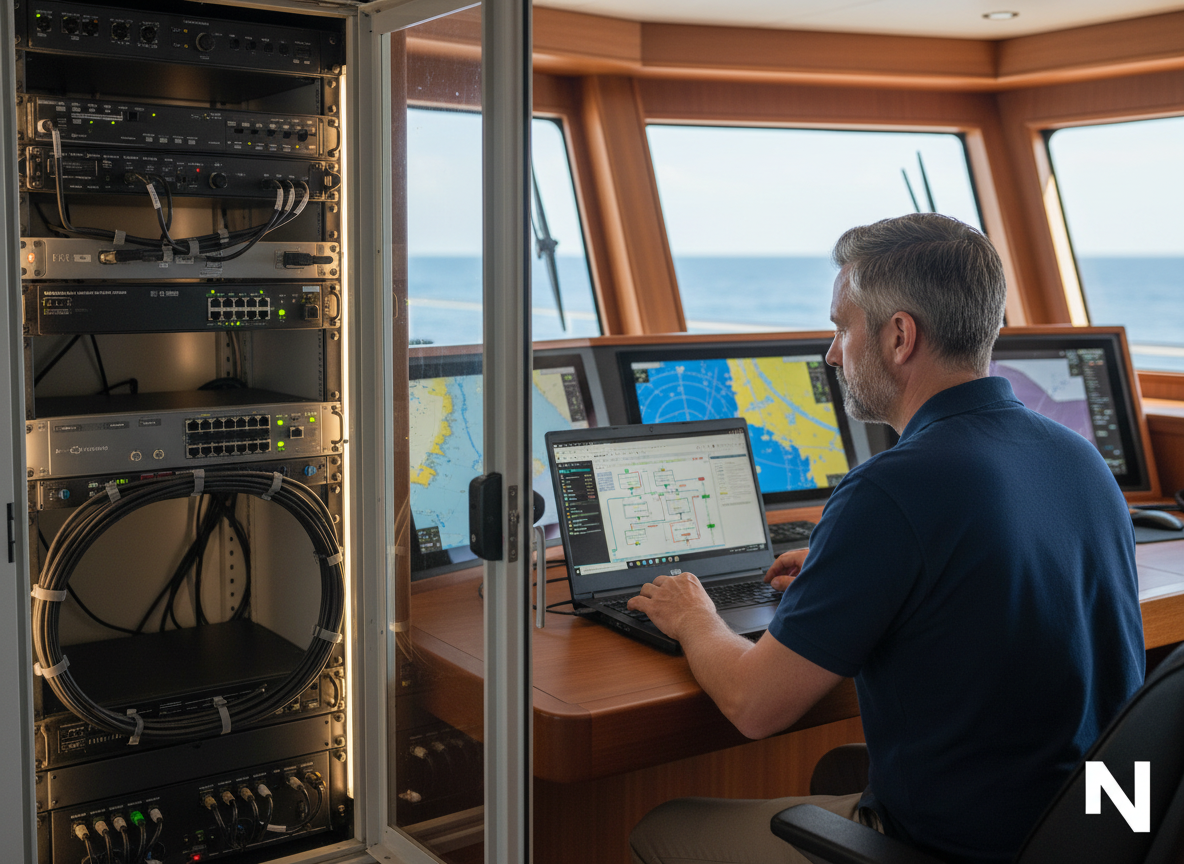
Cyber incidents in maritime aren’t just a “big ship” problem anymore. Yachts rely on connected navigation, entertainment, monitoring, and vendor support. The weak point is often basic: unmanaged access, shared passwords, and untracked third-party work.
The risk isn’t theoretical. It’s downtime, safety exposure, and guest privacy issues.
What it means for captains and owners
Captains need governance, not jargon. Who accessed what, when, and why? What changed? Can you roll it back? Without traceability, even a small issue becomes a long investigation.
Owners benefit from reduced risk and cleaner insurance conversations when processes are documented.
What it means for suppliers
Vendors who follow clean access practices, document changes, and provide clear handover notes are increasingly preferred. Cyber hygiene is becoming a differentiator.
Suppliers who can work within yacht operational constraints (quiet hours, guest privacy, limited downtime) will win more repeat work.
Best practices (this week’s checklist)
- Separate networks: guest Wi‑Fi, crew Wi‑Fi, and vessel systems should not be one flat network.
- Control vendor access: time-limited credentials, logged changes, clear approvals.
- Patch discipline: schedule updates during low-impact windows.
- Incident playbook: who to call, what to isolate, what to document.
- Vendor handover notes: every job ends with a short “what changed” report.
How the Nautaes marketplace + marine ERP approach helps
The Nautaes marketplace helps captains find verified specialists rather than unknown contractors. That reduces the risk of poor practices and unclear accountability.
A marine ERP approach enforces traceability: work requests, approvals, change notes, and invoices connected in one operational record. That’s how cyber risk becomes manageable.
Recommendation (best practice)
Treat cyber like engineering: planned, documented, and verified. If you can’t explain what changed, you can’t control the risk.
CTA
Use the Nautaes marketplace and run vendor work like a marine ERP: controlled, accountable, and ready for audit.


